


Improving Efficiency by 30% with AI Vision in a Local Electronics Plant
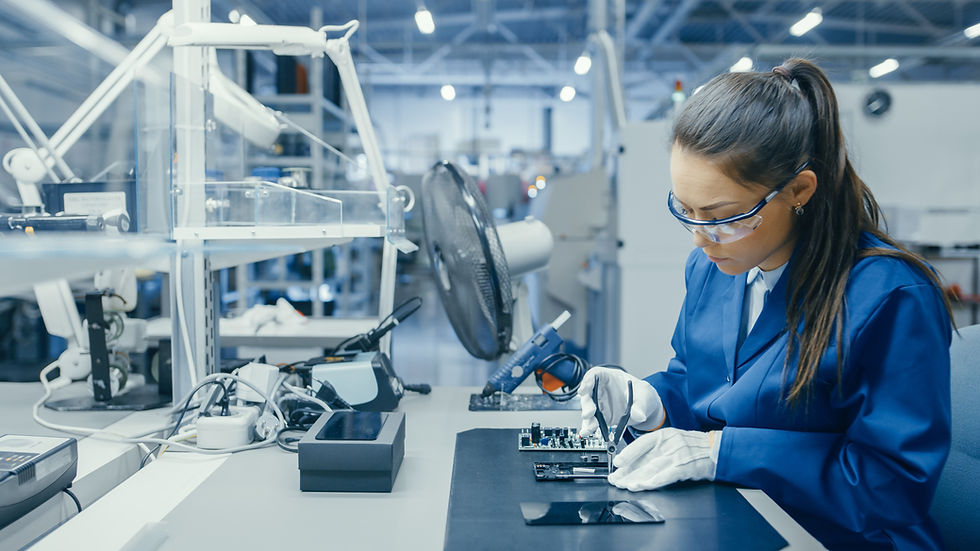
A local electronics manufacturer transformed its production line using AI-powered machine vision, achieving a 30% efficiency improvement while reducing defects and manual inspection costs. This example demonstrates how measurable outcomes from intelligent automation drive credibility, operational gains, and long-term competitive advantage.
At KLICH, we believe intelligent automation must deliver measurable business impact — not just technological advancement. In one local electronics manufacturing plant, this philosophy translated into a 30% improvement in production efficiency after implementing AI-powered machine vision. The results demonstrated how data-driven inspection and real-time analytics can transform operational performance while strengthening quality control.
In high-volume electronics manufacturing, precision is critical. A microscopic soldering defect, slight component misalignment, or minor surface imperfection can lead to product malfunction, warranty claims, and reputational damage. The plant, which specializes in printed circuit board assemblies (PCBAs), had been facing mounting pressure to increase throughput while maintaining strict quality standards.
Previously, inspection relied heavily on manual visual checks supported by conventional rule-based vision systems. Skilled operators worked diligently to identify visible flaws, but human fatigue and production speed created unavoidable variability. Meanwhile, traditional vision systems struggled with changing lighting conditions, complex defect patterns, and frequent product variations. False rejects were common, and some subtle defects escaped detection.
As production volumes increased, management faced a difficult choice: hire additional inspectors and raise labor costs or risk higher defect rates and customer dissatisfaction. Neither option was sustainable in a competitive electronics market.
The solution was to implement an AI-powered machine vision system capable of learning from real production data. Unlike traditional systems programmed with fixed inspection rules, AI vision uses deep learning algorithms trained on thousands of images to recognize patterns and detect irregularities with higher accuracy. The system continuously improves by learning from new data, making it adaptable to evolving production conditions.
Industrial-grade cameras were installed along the surface-mount technology (SMT) line to capture high-resolution images of solder joints, component placement, and board alignment. Historical defect images were used to train the AI model to identify issues such as insufficient solder, bridging, tombstoning, and misalignment. Once deployed, the system delivered real-time inspection results without slowing production.
Within the first three months, measurable improvements became evident. Inspection accuracy increased significantly, reducing false rejects by nearly 25%. This alone saved substantial time previously spent reviewing boards that were actually compliant. More importantly, early-stage defects were identified with greater consistency, preventing faulty assemblies from advancing to later stages where rework costs are far higher.
Overall production efficiency improved by 30% compared to baseline operations. This gain resulted from multiple contributing factors. Real-time AI inspection reduced bottlenecks caused by manual review queues. Early defect detection minimized rework and scrap. Most significantly, the data generated by the system provided engineers with actionable insights into recurring defect patterns.
For example, analysis revealed that minor stencil alignment shifts during peak operating temperatures were contributing to recurring solder inconsistencies. With clear data visibility, engineers adjusted calibration procedures and refined environmental controls. As a result, defect rates declined further, and process stability improved.
The financial impact was substantial. Scrap rates dropped by 18%, rework time decreased significantly, and labor costs associated with manual inspection were reduced. The plant estimated annual savings in the hundreds of thousands of dollars, achieving a projected return on investment within the first year. Beyond cost savings, on-time delivery performance improved, strengthening customer confidence and reinforcing long-term partnerships.
Equally important was the cultural shift within the organization. Quality assurance evolved from reactive defect correction to proactive process optimization. Operators gained greater confidence in inspection consistency. Management gained real-time visibility through centralized dashboards displaying yield performance, defect trends, and equipment behavior.
The AI vision system also proved highly adaptable. When new product variants were introduced, retraining the model required updating image datasets rather than rewriting complex inspection rules. This flexibility supported faster product launches and minimized downtime during production changes.
This example underscores a broader reality in modern electronics manufacturing: intelligent automation is not about replacing people; it is about augmenting decision-making with precision data. By combining AI vision with real-time analytics, manufacturers can move from isolated quality checks to fully integrated operational intelligence.
As global competition intensifies and product complexity continues to grow, manufacturers must deliver both speed and precision. AI-powered vision systems provide a practical pathway to achieving that balance. With measurable improvements in efficiency, defect reduction, and cost control, the transformation becomes not just technological but strategic.
For manufacturers aiming to remain competitive in an increasingly data-driven industry, the question is no longer whether AI vision can improve performance. The evidence shows it can. The real opportunity lies in how quickly organizations can adopt intelligent systems to unlock measurable, sustainable growth.